Become Your Own Lender — On Your Terms.

The Power Banking Concept — also known as Infinite Banking or Bank on Yourself — is a strategy that uses the cash value of a dividend-paying whole life or Indexed Universal Life (IUL) policy as a personal financing reservoir. Rather than borrowing from a bank for major purchases, the policyholder borrows against their policy's cash value. The policy continues to earn credited interest on the full cash value — not just the net after the loan — while the loan is outstanding.

The concept is not about getting rich quickly. It is about capturing a structural advantage: when you borrow from yourself instead of a bank, the interest you pay goes to your own policy, not to a third-party lender. Over decades and multiple loan cycles, this recaptured interest compounds — producing a meaningfully higher lifetime net worth than the traditional financing model. PWR designs IUL policies specifically optimized for maximum cash value accumulation and banking efficiency.

Design My Personal Bank
01

The Non-Direct Recognition Advantage: The Key Mechanical Fact

The entire Power Banking strategy depends on a specific policy design feature called non-direct recognition. In a non-direct recognition policy, the insurance carrier credits interest on the full face value of the cash value account — regardless of whether a portion of it is pledged as collateral for a policy loan. This means that if your cash value is $200,000 and you borrow $80,000 against it, you are still earning credited returns on the full $200,000 — not just on the $120,000 net.

02

The IUL as a Banking Vehicle: Why Indexed Over Whole Life

Traditional Power Banking strategies use dividend-paying whole life insurance. The PWR Power Banking Concept uses Indexed Universal Life (IUL) because it offers a zero-floor guarantee (no downside in negative market years), index-linked growth potential that can exceed whole life dividends in strong markets, and significantly more premium flexibility. The IUL also provides a larger death benefit per premium dollar — an important consideration for clients who also need life insurance protection.

03

The Loan Cycle: How Repayment Creates the Compounding Effect

The cycle has four steps: (1) Deposit premiums — cash value grows tax-deferred. (2) Borrow against cash value for a purchase, investment, or business expense. (3) Repay the loan — with interest to your policy carrier — on your own schedule. (4) Loan balance is eliminated, cash value has never stopped compounding, and the policy is replenished as a lending source for the next cycle. Every repayment recapitalizes the bank.

I

Your Capital Never Stops Working

The fundamental advantage of the Power Banking Concept is continuity of compounding. In a conventional financing model, capital deployed into a purchase stops earning returns until the loan is repaid. In a Power Banking model, the policy's full cash value earns indexed credits continuously — even while a portion is lent out. The same dollar is simultaneously serving as collateral and earning a return.

  • Full cash value earns credited interest — including the loaned portion
  • Non-direct recognition policy design is mandatory for this structure to work
  • No interruption of compounding during loan periods of any length
  • Zero floor on IUL crediting — no market downside affects the banking base
II

Interest Recaptured and Recycled

When you repay a bank loan, the interest payment disappears permanently — it is income to the bank, gone from your financial system. When you repay a policy loan, the interest stays inside your personal banking system. The carrier charges you a loan rate; you can choose to repay at a higher rate, with the difference credited to your policy's value. Over multiple loan cycles across 20–30 years, this recaptured interest compounds into a significant wealth differential.

  • Policy loan rate: typically 5–6% depending on carrier
  • Self-directed repayment rate: you decide — the spread builds your policy
  • Recaptured interest compounds at the policy's credited rate
  • Each loan cycle is an opportunity to recapture another tranche of interest
III

Tax-Free Access Without IRS Interference

Policy loans are not classified as income under the Internal Revenue Code — they are a loan against collateral (your cash value). You receive the funds without a 1099, without income tax owed, without triggering a taxable event. Used as a retirement income supplement, policy loans provide tax-free cash flow that does not interact with Social Security taxation, Medicare IRMAA thresholds, or RMD income calculations.

  • Policy loans not classified as income — no 1099 issued
  • No income tax owed on loan proceeds at any amount
  • Loans do not increase provisional income for Social Security taxation
  • Loans do not trigger IRMAA Medicare premium surcharges

Six Ways to Deploy
Your Personal Bank.

IUL Policy Design for Banking

Not every IUL policy is built for Power Banking. Banking-optimized IUL policies are designed with minimum face amounts, maximum premium funding, and non-direct recognition loan provisions that allow the full cash value to earn credited interest during loan periods. PWR designs every Power Banking IUL from the ground up for maximum banking efficiency — not for maximum death benefit or maximum insurer commission.

  • Minimum face amount — maximum premium-to-cash-value ratio
  • Non-direct recognition loan provision — full CSV earns during loan
  • Maximum Accumulation Rider reduces insurance costs, accelerates CSV build
  • Flexible premium design — increase, decrease, or skip within policy guidelines
  • Zero-floor IUL crediting — no market downside in negative years
  • PWR runs multi-carrier analysis comparing cash value at years 5, 10, 20
Run the Simulator

At a glance

Max

Cash value per premium dollar

Non-DR

Policy design essential for banking

Zero

Floor — no market downside

Multi

Carrier analysis required

Design My Banking IUL Policy

The policy design determines the strategy's effectiveness — every structural decision matters.

Schedule a Free Strategy Session

Vehicle Power Banking

Auto loans are among the most expensive forms of recurring financing for most households — and among the most replaceable with the Power Banking Concept. A family that finances 5–6 vehicles over a lifetime through conventional auto loans will pay $80,000–$120,000 in interest to banks. The same family, using policy loans to purchase each vehicle and repaying the loan to their own policy, recaptures that interest into a compounding asset.

  • Policy loan replaces auto loan — no credit check, no application
  • Interest paid to policy, not bank — full amount recaptured
  • Policy cash value continues compounding during the repayment period
  • Next vehicle purchased the same way — same cash base, replenished by repayment
  • Over 30 years and 5 vehicles: recaptured interest exceeds total vehicle costs
  • Luxury and commercial vehicles both viable — no loan amount restriction
Run the Simulator

At a glance

$80K+

Avg auto loan interest over a lifetime

Recaptured

Every dollar stays in your policy

No Credit

Check — ever — for policy loans

5 Cycles

Per lifetime — all recaptured

Model My Vehicle Banking Strategy

See how many auto loans you can eliminate from the bank's ledger — and add to your own.

Schedule a Free Strategy Session

Real Estate Power Banking

Policy loans used as real estate down payments allow a buyer to deploy capital into a property without depleting a savings account — and while the policy's cash value keeps compounding. When the property appreciates and the loan is repaid from rental income or sale proceeds, the policy is recapitalized at full value, ready for the next real estate transaction.

  • Policy loan provides down payment — no savings account depleted
  • Property cash flow or appreciation repays the loan on investor's schedule
  • Policy cash value compounds throughout the property hold period
  • Loan repayment recapitalizes the policy for next real estate transaction
  • Combines real estate leverage with policy compounding leverage
  • No bank qualification required for the down payment capital
Run the Simulator

At a glance

Double

Leverage — property + policy both compound

No Bank

Approval for the down payment capital

Cash Flow

Repays the policy loan on your schedule

Recycle

Capital for the next property

Model a Real Estate Power Banking Scenario

See how policy loans as down payments interact with rental income and property appreciation.

Schedule a Free Strategy Session

Business Power Banking

Business owners can use policy cash value as working capital, equipment financing, or bridge capital during cash flow gaps — without going to a bank, pledging business assets, or disrupting their personal credit profile. The business owner repays the policy from business revenue, recapturing the financing cost that would otherwise leave the economic system.

  • Working capital loans — no bank required, no credit inquiry
  • Equipment financing without business lender qualification
  • Bridge capital between contracts, sales, or investment rounds
  • Business repays policy on terms aligned with cash flow — no fixed bank schedule
  • Policy cash value grows throughout the business deployment period
  • Protects personal credit from business financing activity
Run the Simulator

At a glance

No Bank

Approval for working capital

Bridge

Capital on your own timeline

Protect

Personal credit profile

Business

Revenue repays the policy

Model Business Power Banking

Replace your business line of credit with your own policy — at your own rates, on your own schedule.

Schedule a Free Strategy Session

Education Power Banking

Using a policy loan to fund education costs eliminates student loan interest — and the repayment goes back to the parent's policy, not to a loan servicer. Unlike 529 plans, which lock funds into education use, a Power Banking policy can be used for education or any other purpose — and the funds never stop growing.

  • Policy loan funds tuition — student graduates with no loan obligation
  • Repayment goes to parent's policy — not a loan servicer
  • Policy has no use restriction — unlike 529 plans locked to education
  • Policy cash value grows throughout the tuition payment period
  • Multiple education cycles possible from the same policy base
  • Death benefit protects the student's financial future throughout
Run the Simulator

At a glance

No

Student loan interest to servicers

Flexible

Unlike 529 — any use permitted

Parent

Policy recapitalized by repayment

No Lock

Up — fully liquid if plans change

Model an Education Power Banking Plan

See how a policy loan replaces student loan interest — and the repayment builds your retirement base.

Schedule a Free Strategy Session

Retirement Income Banking

In retirement, the Power Banking Concept inverts: instead of depositing premiums and borrowing for purchases, the retiree uses the accumulated cash value as a source of tax-free retirement income through policy loans. These loans are not income, do not affect Social Security taxation, do not trigger Medicare IRMAA surcharges, and do not appear in RMD calculations — making the IUL the most tax-efficient supplemental retirement income source available.

  • Policy loans in retirement provide tax-free income — no 1099
  • Loans do not count as income for Social Security taxation thresholds
  • Loans do not trigger IRMAA Medicare premium surcharges
  • Full cash value continues growing even as loans are taken for income
  • Death benefit offset by outstanding loans — heirs still receive net benefit
  • Coordinates with Roth IRA, Social Security, and qualified plan distributions
Run the Simulator

At a glance

Tax-Free

Policy loan retirement income

No

IRMAA surcharge trigger

No

Social Security tax impact

No RMD

Policy loans are not distributions

Model Power Banking as Retirement Income

See how policy loans supplement Roth and Social Security income without triggering any income thresholds.

Schedule a Free Strategy Session

From First Premium to Lifetime Bank

Maximum Cash Value, Minimum Death Benefit Cost
  • Select carrier with non-direct recognition loan provision — mandatory for banking strategy
  • Minimize face amount to reduce cost-of-insurance charges — accelerates cash value build
  • Add Maximum Accumulation Rider (or equivalent) to shift premium to cash value vs. death benefit
  • Set premium at maximum IRS-allowed amount (TEFRA/DEFRA limits) to avoid MEC status while maximizing cash
Not All IUL Policies Are Built for Banking
  • Non-direct recognition: policy earns full credited rate on CSV including loaned portion
  • Compare CSV at years 5, 10, 15, 20 across at least 3 carriers — don't compare death benefits
  • Loan provision type: fixed vs variable loan rate — understand the structure before committing
  • Index cap and floor: S&P 500 participation rate, cap rate, and floor rate all matter for banking performance
Multi-Carrier Banking IUL Analysis Before Any Application
  • PWR runs a dedicated banking IUL comparison — different criteria from standard IUL selection
  • Analysis shows CSV at 10, 20, and 30 years net of all charges across qualified carriers
  • Loan provision verified as non-direct recognition before policy is recommended
  • Target: highest Year 10 CSV per premium dollar paid — banking utility is the primary metric
Build Cash Value Before First Loan
  • Years 1–5 are the capitalization phase: premium deposits in, no loans out
  • Most banking IUL policies need 2–3 years before meaningful loan capacity exists
  • Resist borrowing in Year 1 — surrender charges and insufficient CSV create loan risk
  • IUL policy loans typically available starting Year 2 depending on carrier
Overfund in Early Years for Maximum Leverage
  • Overfunding (premium near MEC limit) in years 1–5 maximizes the banking reservoir
  • Higher early cash value = larger available loan capacity = bigger purchases sooner
  • Single-pay or 7-pay structure deposits maximum capital fastest within IRS limits
  • Front-loading premium deposits provides longest compounding runway for the strategy
Annual Policy Review From Year One
  • PWR tracks CSV growth against the original illustration annually
  • Year 2 status check: confirm CSV is building as projected; identify any crediting rate divergence
  • Year 3: model first loan opportunity — confirm CSV provides loan capacity for planned purchase
  • Pre-loan review: PWR calculates net benefit of policy loan vs bank loan for the specific purchase
Borrow Against Policy — Not From It
  • Policy loan request submitted to carrier — typically 7–14 day processing
  • Loan funded directly to policyholder — no questions, no qualification, no credit check
  • Outstanding loan balance accrues at carrier's loan rate — typically 5–6% fixed or variable
  • Policy cash value continues earning full indexed credit rate on entire CSV — including loaned amount
Design Your Own Repayment Schedule
  • No required minimum payment — no bank forcing monthly payments
  • Self-directed repayment timeline — align with cash flow, not bank schedule
  • Recommended: repay at a rate higher than the carrier loan charge — excess rebuilds your policy
  • Pay more in good months, less in slow months — complete flexibility within carrier guidelines
Repayment Plan Modeled Before Loan Is Taken
  • PWR builds a repayment schedule before the loan is funded — showing year-by-year policy impact
  • Model compares: full repayment in 3 years vs 5 years vs 7 years vs never — each affects next loan capacity
  • CPA briefed: policy loans are not income; no tax consequences for properly structured loans
  • Carrier notified of loan intention — PWR facilitates the request with appropriate documentation
Repay, Replenish, Redeploy
  • Each loan repayment restores the policy's full banking capacity
  • Replenished CSV is now larger than at first loan — years of compounding added
  • New loan capacity = updated CSV × available loan percentage (typically 90–95%)
  • Each successive loan cycle starts from a higher capital base — the strategy accelerates over time
The Compounding Loan Cycle
  • Year 1–3: Capitalization — deposits only
  • Year 3–8: First cycle — borrow, repay, replenish
  • Year 8–13: Second cycle — larger CSV, larger loan capacity
  • Year 13+: Third cycle and beyond — banking base now significantly larger than original premium investment
Annual Strategy Review for Each Loan Cycle
  • PWR reviews the policy before each loan cycle — confirms available capacity and loan rate
  • Update repayment model to reflect current CSV and planned loan amount
  • If investment use is planned: model return spread over loan rate — confirm net positive arbitrage
  • Annual performance report from carrier compared to original illustration — flag any material divergence
From Financing Tool to Income Source
  • Policy shifts from borrowing for purchases to borrowing for retirement income
  • Policy loans in retirement = tax-free income without IRS interaction
  • Large outstanding loan is serviced by the death benefit at death — not by the retiree
  • Loans do not affect Social Security taxation, IRMAA, or RMD calculations
Sequence Loans With Other Income Sources
  • Policy loans used to supplement Roth IRA and Social Security in early retirement years
  • Loans fill income gaps without triggering bracket changes
  • In later years: loans reduce as RMDs provide mandatory income
  • Death benefit net of loans still provides meaningful wealth transfer to heirs
Retirement Income Plan Coordinates All Sources
  • PWR models policy loan income alongside Roth, Social Security, and qualified plan distributions
  • Policy loan amount per year optimized against total income and bracket management
  • Loan schedule provided to CPA annually — confirms no income reporting required
  • Legacy review: ensures death benefit net of loans still fulfills estate planning objectives

See Exacly What The Bank Costs You Over Time

Governance Readiness Scorecard

25 Governance Elements Across 5 Critical Categories
0 of 25
Completed

App feature

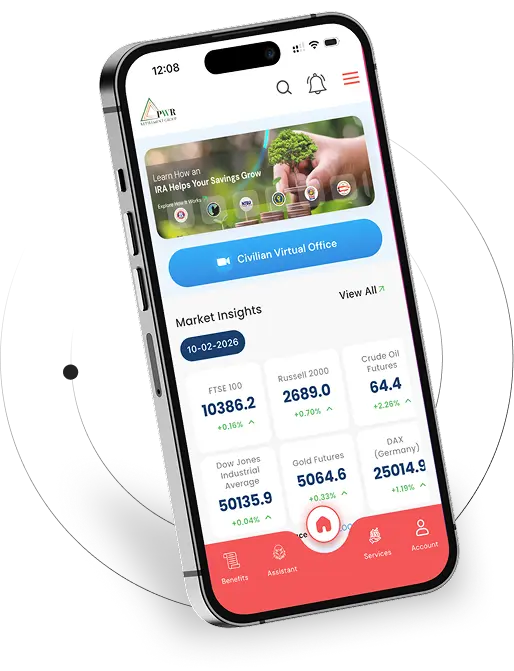
Reasons to Download Our Application Today

  • PWR puts your retirement planning, benefits guidance, and financial tools in one secure app. Access everything easily, track your progress in real time.

  • Every financial journey is different. PWR focuses on your goals, benefits, and timeline—delivering guidance built around you, not a generic plan.

  • PWR gives you access to workshops, live events, and podcasts that simplify complex financial topics into clear, practical insights.

Download The PWR App Now

Build More Control Over Your Cash Flow, Access, And Financial Future.

The Power Banking Concept helps individuals and business owners think differently about how money is saved, accessed, and used. With the right structure, it can support liquidity, future opportunities, emergency planning, and long-term financial flexibility while keeping your overall strategy organized and aligned with your goals.

Guidance
For Your Most Common Questions

ask an advisor

The Power Banking Concept is a financial strategy that helps individuals and business owners create more control over how money is saved, accessed, and used. It is often designed around building cash value that may be available for future opportunities, emergencies, or major purchases. The goal is not to replace every financial tool, but to create a more flexible system. With proper planning, the Power Banking Concept in puerto rico can help clients think differently about liquidity, long-term growth, and financial independence.

How Power Banking Works is based on creating a personal funding system that allows money to grow while still offering access when needed. Instead of depending only on outside lenders, the strategy may help you use accumulated value for personal or business needs. This can support purchases, investments, emergency reserves, or future planning. The key is structure. A well-designed Power Banking strategy can help you take control of your finances, increase flexibility, and make your money work for you over the long term.

Power Banking vs Traditional Banking comes down to control and purpose. Traditional banking usually focuses on deposits, loans, and interest paid to financial institutions. Power Banking focuses on building a personal financial system that may allow you to access value while keeping your long-term plan active. This does not mean traditional banks are unnecessary. Instead, Power Banking can work as an additional strategy for people who want more flexibility, better organization, and a stronger connection between saving, borrowing, and future wealth planning.

The Power Banking Concept may be useful for business owners, professionals, families, and individuals who want more control over cash flow and long-term financial planning. It can be especially helpful for people who regularly finance purchases, invest in opportunities, or want better access to funds. A good strategy should match your income, goals, risk comfort, and future plans. Power Banking is not one-size-fits-all. It works best when it is designed carefully around how you actually use money.

Yes. Business owners can use Power Banking as part of a broader financial strategy for liquidity, opportunity funding, emergency reserves, or long-term planning. It may help create access to capital without relying only on banks or outside financing. For companies in Puerto Rico, the Power Banking Concept in puerto rico can be reviewed alongside business goals, cash flow, protection needs, and succession planning. When structured properly, it can support both personal and business financial decisions with more confidence.

Power Banking should be designed with care because the structure matters. The wrong setup may not match your goals, cash flow, or long-term needs. Professional guidance helps review whether the strategy fits your financial situation before moving forward. A comprehensive review can outline the costs, funding methods, access guidelines, growth opportunities, and potential drawbacks involved. This helps you understand the strategy before committing. The right guidance can turn Power Banking from a confusing concept into a practical financial tool.