The Contract That Keeps Partners Safe.

A buy-sell agreement (also called a buyout agreement or business will) is a legally binding contract between co-owners that governs the sale of a business interest when a specified triggering event occurs. It answers three questions that must be answered before the crisis, not during it: who can buy, at what price, and how is the purchase funded.

Most business disputes arise not from bad intentions but from undefined expectations. Without a buy-sell agreement, the surviving partners, the deceased owner's family, the disabled owner, and the courts are left to negotiate under the worst possible conditions — grief, urgency, and misaligned incentives. The buy-sell removes uncertainty and replaces it with a binding plan. PWR designs and funds every buy-sell agreement from the date of execution.

GET MY Buy-Sell Design
01

Cross-Purchase vs Entity-Purchase: The Most Consequential Decision

In a cross-purchase structure, each co-owner purchases and owns a life insurance policy on every other owner. At a triggering event, the surviving owner uses the death benefit to buy the departing owner's shares — gaining a stepped-up cost basis equal to the purchase price. In an entity-purchase (redemption) structure, the business owns the policies on each owner, and the company buys back the shares. Cross-purchase is typically superior for 2-owner businesses; entity-purchase simplifies administration for 3+ owners but creates potential alternative minimum tax exposure for C-Corps.

02

Valuation Method: Fixed Price, Formula, or Independent Appraisal

The valuation method written into the buy-sell determines what every owner's interest is worth at the moment of a triggering event. A fixed price, set once and never updated, almost always becomes inequitable. A formula (e.g., 3× EBITDA) is more dynamic but may not reflect market conditions at exit. Independent appraisal, triggered at each ownership change, is the most accurate but most expensive. PWR recommends independent appraisal for businesses over $1M in value, with a formal valuation conducted every 2–3 years to ensure buy-sell insurance stays properly funded.

03

Funding the Agreement: Life Insurance Is the Only Reliable Mechanism

An unfunded buy-sell agreement is a legal document that describes an obligation the business cannot fulfill. At a triggering event, the purchase price is owed immediately — and without a funding mechanism, the surviving partner must either liquidate personal assets, borrow at emergency rates, or force a distressed sale of the business.

I

The Legal Agreement

The buy-sell agreement is a legally binding contract that must be drafted by a licensed business attorney, signed by all owners, and integrated with the entity's governing documents — shareholder agreement, operating agreement, or partnership agreement. PWR designs the financial structure and funding mechanics; the attorney executes the legal document.

  • All triggering events defined: death, disability, retirement, divorce, bankruptcy, voluntary exit
  • Valuation method specified — fixed price, formula, or appraisal
  • Payment terms: lump sum vs. installment and interest rate on deferred payments
  • Mandatory vs. optional buyout at each triggering event
  • Annual review clause to update valuation and insurance coverage
  • Right of first refusal provisions for voluntary transfers
II

The Insurance Funding

The buy-sell agreement without insurance is a promise the business cannot keep. Life insurance funds the death trigger — creating the exact purchase price on demand, tax-free. Disability buyout insurance funds the disability trigger. PWR designs the insurance structure, selects the ownership arrangement (cross-purchase vs entity-purchase), and coordinates multi-carrier policy selection for every co-owner relationship.

  • Life insurance policy per co-owner: amount equals each owner's equity stake
  • Disability buyout insurance: funds the disability trigger — not just lost salary
  • Cross-purchase vs entity-purchase: ownership structure drives tax outcome
  • Annual review to match coverage to current business value
  • Multi-carrier competitive analysis for each policy
  • PWR coordinates policy issuance, ownership, and beneficiary designations
III

The Tax Architecture

The funding structure of a buy-sell agreement has significant tax consequences. In a cross-purchase, the surviving owner's cost basis in the acquired shares equals the purchase price — potentially eliminating capital gains tax on a future sale. In an entity-purchase, the surviving owner's basis in their existing shares is unchanged. The entity type (C-Corp vs S-Corp vs LLC) also affects whether insurance premiums are deductible and whether death benefits trigger the alternative minimum tax.

  • Cross-purchase: stepped-up basis for surviving owner — reduces future capital gains
  • Entity-purchase: simpler administration for 3+ owners
  • C-Corp AMT exposure on entity-owned life insurance — structure accordingly
  • Premium deductibility: generally not deductible — avoid double reporting
  • Section 101 reporting requirements for employer-owned life insurance
  • Coordinate with CPA annually to ensure tax treatment is optimized

Six Structures.
One Right
for Your Partnership.

Cross-Purchase Buy-Sell

Each co-owner purchases and holds a life insurance policy on every other co-owner. At a triggering event, the surviving owner uses their policy's death benefit to buy the departing owner's shares directly — gaining a stepped-up cost basis equal to the purchase price. This is the preferred structure for 2-owner businesses and any situation where tax basis preservation matters.

  • Each owner owns and pays for policies on all other owners
  • Death benefit paid to the surviving owner — not the business
  • Surviving owner's cost basis steps up to the purchase price
  • Reduces or eliminates capital gains tax on a future business sale
  • No corporate AMT exposure (unlike entity-purchase for C-Corps)
  • Premium for 3+ owners grows complex — consider split-dollar arrangement
Model My Funding

At a glance

Basis

Stepped-up to purchase price

No AMT

C-Corp tax advantage

Direct

Payment owner to owner

Best

For 2-owner businesses

Design a Cross-Purchase Agreement

The best structure for 2-owner businesses — and the most tax-efficient at the point of a future sale.

Schedule Free Agreement Review

Entity-Purchase Buy-Sell

The business entity owns and pays the premium on life insurance policies on each owner. At a triggering event, the business uses the death benefit to redeem (buy back) the deceased or departing owner's shares — reducing the number of outstanding shares and increasing the remaining owners' percentage automatically.

  • Business owns and pays all policies — one premium payer, simplified admin
  • Death benefit paid to the company — used to redeem shares
  • Surviving owners' percentages increase proportionally with no cash outlay
  • For 3+ owners: significantly simpler administration than cross-purchase
  • C-Corp risk: entity-owned life insurance may trigger alternative minimum tax
  • Surviving owners' basis in their existing shares is NOT stepped up
Model My Funding

At a glance

Simple

One payer — the business

3+ Owners

Preferred for multi-owner orgs

Auto %

Ownership % increases on redemption

No Basis

Step-up for surviving owners

Design an Entity-Purchase Agreement

The simpler structure for 3 or more co-owners — the company funds everything from a single ownership point.

Schedule Free Agreement Review

Hybrid Wait-and-See

A wait-and-see buy-sell defers the decision of cross-purchase vs entity-purchase until the triggering event occurs. At that point, the surviving owners have the option to purchase first; if they decline, the entity is obligated to buy. This flexibility allows the tax outcome to be optimized based on circumstances at the time of the event.

  • Decision deferred: surviving owners get first option to purchase
  • If owners decline, entity is obligated to redeem the shares
  • Tax structure can be optimized at the point of the actual event
  • Requires careful drafting to avoid IRS scrutiny on option vs. obligation
  • Must still fund both possible structures with insurance at outset
  • Best for businesses where owner circumstances may change significantly
Model My Funding

At a glance

Flexible

Optimize tax at event, not signing

Option

Owners choose first, entity second

Both

Funded from the start

Complex

Drafting requires careful IRS review

Explore a Hybrid Agreement

The most tax-flexible structure — but requires careful drafting and should be reviewed by both business attorney and CPA.

Schedule Free Agreement Review

Disability Buyout Insurance

The disability trigger in a buy-sell agreement is the most overlooked — and the most likely to occur. Disability buyout insurance pays the non-disabled owner the purchase price for the disabled owner's shares after a defined elimination period (typically 12–24 months of total disability). Without it, a permanently disabled partner remains a legal owner entitled to distributions without contributing.

  • Benefit pays after 12–24 month elimination period of total disability
  • Definition of disability in the policy must match the buy-sell agreement exactly
  • Benefit paid as lump sum or installments per the buyout structure
  • Policy owned by the purchasing party (cross) or the entity (redemption)
  • Benefit is not an income replacement — it funds the actual buyout
  • Annual review critical — disability buyout limits are often lower than life death benefits
Model My Funding

At a glance

More likely than death before retirement

12–24

Month elimination period

Must Match

Policy definition = buy-sell language

Most

Overlooked gap in buy-sell funding

Add Disability Buyout to My Agreement

The most overlooked gap in every buy-sell — and the trigger most likely to be pulled before retirement.

Schedule Free Agreement Review

Buy-Sell Valuation Method

The valuation method written into a buy-sell agreement determines what every owner receives at the moment of a triggering event. A fixed price never updated produces litigation. A formula can misfire in good or bad markets. Independent appraisal produces the most defensible, market-reflective result — but must be properly triggered and coordinated with insurance coverage.

  • Fixed price: simplest but must be updated annually or becomes inequitable
  • Formula (EBITDA multiple, book value): dynamic but can produce extreme results
  • Independent appraisal: most accurate — triggered at each ownership change event
  • Appraisal required: CBV or CVA-certified valuator
  • Insurance coverage must be updated to match new appraisal value
  • IRS may scrutinize valuations that are significantly below market — especially for estate tax
Model My Funding

At a glance

3 Methods

Fixed, formula, or appraisal

Defensible

IRS and court review standard

Annual

Update recommended for all methods

Drives

Insurance coverage requirement

Select My Valuation Method

The valuation method is the most litigated element of any buy-sell. Choose the right one before you need it.

Schedule Free Agreement Review

Family Business Buy-Sell

Family business buy-sell agreements require additional layers: equalization strategies for heirs not involved in the business, coordination with estate planning documents, family governance agreements that address succession expectations, and careful structuring to avoid IRS gift tax scrutiny on below-market transfers to family members.

  • Equalization provisions for heirs who are not business owners
  • Coordination with will, trust, and estate plan — all documents must align
  • Family governance agreement addressing succession expectations before conflict
  • IRS safe harbor for estate-tax valuation must be met in the agreement
  • Gift tax consequences of below-market transfers must be modeled
  • Business attorney + estate attorney coordination is mandatory for family plans
Model My Funding

At a glance

Estate

Plan must align with buy-sell

Equalize

Non-business heirs must be addressed

IRS

Scrutiny of below-market transfers

Two

Attorneys required — business + estate

Design a Family Business Buy-Sell

Family business transfers require two attorneys, coordinated estate planning, and heir equalization — plan accordingly.

Schedule Free Agreement Review

From Design to Executed Transfer

What Exists and What's Missing
  • Inventory all existing agreements: shareholder agreement, operating agreement, any prior buy-sell
  • Identify all co-owners and their percentage stakes
  • Assess current business value — formal or estimated
  • Review all existing life and disability insurance on owners — coverage amount, ownership, beneficiary
Answer These Before Any Drafting Begins
  • Cross-purchase or entity-purchase — based on owner count, entity type, and tax objectives
  • What triggering events must be covered: death, disability, retirement, divorce, voluntary exit?
  • What valuation method best reflects business value and holds up under IRS scrutiny?
  • Is the buy-sell mandatory at each trigger, or do surviving owners have the option to purchase?
Gap Report Before Any Product Recommendation
  • PWR identifies every material gap in the existing structure before recommending any insurance product
  • Funding gap is quantified: required coverage vs. current coverage per owner
  • CPA is briefed on the proposed structure for tax treatment review
  • No insurance product is selected until the legal structure is confirmed
Agreement Before Insurance — Always
  • Business attorney drafts the buy-sell agreement based on PWR's financial structure design
  • All triggering events, valuation method, and payment terms are specified in writing
  • Agreement must be signed before any insurance policy is applied for or issued
  • Cross-purchase: each owner's policy ownership and beneficiary designations must match the agreement
What the Agreement Must Specify
  • Valuation method and when it is triggered
  • Payment terms: lump sum vs installment, interest rate on deferred payments
  • Disability definition — must match the disability buyout insurance policy definition exactly
  • Right of first refusal for voluntary transfers — to whom, in what order, at what price
PWR Coordinates the Full Advisor Team
  • PWR provides the financial structure and insurance analysis to the business attorney
  • CPA reviews the draft for tax treatment of premiums and death benefit
  • Estate attorney reviews for coordination with wills, trusts, and estate plan
  • PWR issues a written Funding Recommendation before any insurance application is submitted
Fund Every Trigger the Agreement Creates
  • Life insurance: each owner funded for their full equity value at current business valuation
  • Disability buyout insurance: separate policy for the disability trigger — sized to match the buyout amount
  • Multi-carrier analysis for each policy — comparing cost, underwriting, and policy structure
  • Policy ownership and beneficiary designations set to match the buy-sell structure exactly
Policy Ownership Drives Everything
  • Cross-purchase: each owner owns policies on all other owners — must be personally owned
  • Entity-purchase: business owns and pays all policies — one premium, one owner, one beneficiary
  • Annual review provision: coverage must grow with business value
  • Disability buyout: elimination period in policy must match disability definition in agreement
PWR Manages the Insurance Process End-to-End
  • PWR runs competitive multi-carrier analysis for every policy before any application is submitted
  • All life and disability applications submitted simultaneously — no gaps between policies going in force
  • Policy delivery confirmation: PWR verifies all policies are in force before closing the engagement
  • Annual review calendar set at policy delivery — never miss an update again
Coverage Must Keep Pace with Business Value
  • Compare current business value to policy face amounts — increase coverage if gap has opened
  • Review buy-sell valuation method — confirm it still produces a fair, defensible result
  • Confirm all policy premium payments are current — lapsed policies leave the agreement unfunded
  • Review ownership and beneficiary designations — confirm they still match the agreement structure
Don't Wait 12 Months for These
  • Any ownership change — new partner, departing partner, gift of shares
  • Acquisition, merger, or sale process initiated
  • Significant change in business value (up or down) of more than 20%
  • Any owner's health changes that may affect insurability or coverage terms
Annual Review Is Part of Every Engagement
  • PWR sends a formal annual review request to every buy-sell client in the engagement's anniversary month
  • Review includes: business value update, coverage gap analysis, agreement compliance check
  • Any gaps identified in the annual review are prioritized and addressed before the next review
  • Updated funding model provided to the business attorney for any agreement amendment needed
PWR Assists at Every Trigger Event
  • PWR coordinates the insurance claim process at death or disability
  • Business attorney is notified immediately — triggers legal transfer process
  • CPA and estate attorney coordinated for tax treatment of the proceeds
  • PWR ensures the agreement is executed exactly as designed — no shortcuts, no conflicts

See Exactly Who Owes What to whom

Governance Readiness Scorecard

25 Governance Elements Across 5 Critical Categories
0 of 25
Completed

App feature

Reasons to Download Our Application Today

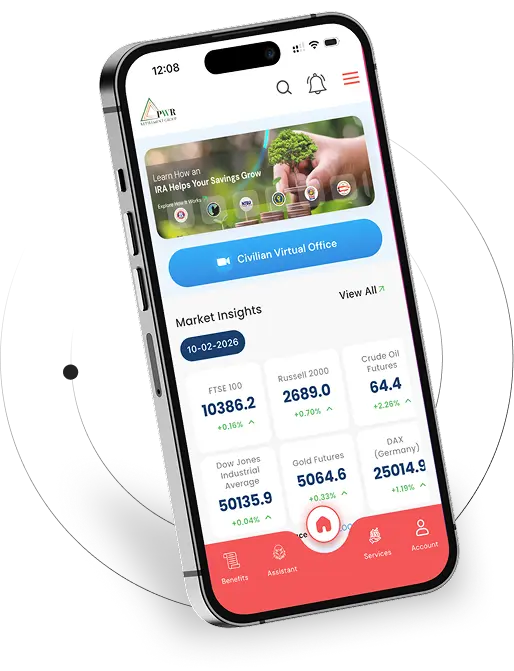
  • PWR puts your retirement planning, benefits guidance, and financial tools in one secure app. Access everything easily, track your progress in real time.

  • Every financial journey is different. PWR focuses on your goals, benefits, and timeline—delivering guidance built around you, not a generic plan.

  • PWR gives you access to workshops, live events, and podcasts that simplify complex financial topics into clear, practical insights.

Download The PWR App Now

Plan Ownership Transitions Before Conflict, Exit, Or Unexpected Change.

A Buy & Sell Agreement helps business owners prepare for important events such as retirement, disability, death, partner separation, or ownership disputes. With a clear agreement, your company can protect business value, define transfer terms, reduce uncertainty, and keep operations stable when major ownership changes happen.

Guidance
For Your Most Common Questions

ask an advisor

Understanding what a buy-sell agreement is helps business owners prepare for major ownership changes before they create conflict. It is a legal and financial arrangement that explains how an owner’s share will be transferred if they retire, pass away, become disabled, or leave the business. This agreement helps protect remaining owners, family members, employees, and the company itself. Instead of making rushed decisions during a difficult moment, the business already has a clear process for valuation, transfer, and continuity.

A business needs a buy-sell agreement because ownership changes can happen unexpectedly. Without a clear plan, partners may disagree over price, control, timing, or who has the right to buy the departing owner’s interest. A well-written agreement helps reduce uncertainty and keeps the business stable during sensitive transitions. It can also protect the company from outside ownership issues, family disputes, or forced sales. For closely held businesses, this planning can be essential for long-term security.

Insurance can help provide the funds needed to complete an ownership transfer when a triggering event occurs. Instead of forcing owners to use business cash, borrow money, or sell assets, insurance may create a more organized funding source. Buy-sell agreement insurance in Puerto rico can be structured around the needs of the owners and the business. The goal is to make sure the agreement is not just written on paper, but also financially supported when it matters most.

A buy-sell agreement may be triggered by events such as death, disability, retirement, divorce, bankruptcy, resignation, or a partner’s decision to leave the company. These events can affect ownership control and business direction. By defining these situations in advance, owners can avoid confusion and emotional decision-making. The agreement can explain who may buy the ownership interest, how the price is determined, and how the transfer will happen. This helps keep the business protected and prepared.

A Buy-sell agreement service in Puerto Rico can be helpful for partnerships, family businesses, corporations, professional practices, and closely held companies with more than one owner. It is especially important when the business depends on owner involvement. This service helps owners review risks, clarify expectations, and create a practical transition strategy. With proper planning, the agreement can support business continuity, protect ownership value, and help all parties understand what will happen if a major change occurs.

A buy-sell agreement should be reviewed when the business value changes, new owners join, an owner leaves, family circumstances shift, or financial goals change. Even stable businesses should review the agreement regularly. An outdated agreement may no longer reflect the company’s current value, ownership structure, or funding needs. Regular review helps keep the plan accurate and useful. It also gives owners confidence that the agreement still supports their business, partners, and long-term succession goals.